TOP
팝업레이어 알림

Thermal Solutions for Mobility
We provide thermal management components required for mobility,
from design to brazing and mass production.


Vaccum Brazing Thermal Platform
We reliably manufacture thermal management components optimized
for long-duration operating environments using vacuum brazing technology.
Proven Joining & Quality
We provide thermal management solutions based on joining quality
proven across diverse industrial environments.
Thermal Brazing Total
We provide thermal management solutions with verified design
and brazing quality, engineered for reliability-critical environments.
Through continuous improvement
and quality innovation,
we deliver the highest-quality products
that meet customer expectations and requirements.

Our Motto
Interest·Anxiety·Overcome
It represents a spirit of growth and challenge that begins with interest,
passes through deep consideration, and ultimately leads to overcoming obstacles.

Management Policy
Minimum·Optimal·Best
On a foundation of fundamental principles,
we realize the highest value through optimal capabilities.

Quality Policy
Customer Satisfaction
Through systematic management and rigorous quality standards,
we deliver sustainable customer satisfaction.

Environment Policy
ECO Compliance
with law and regulation
By complying with environmental regulations and pursuing responsible development, we practice sustainable and eco-friendly management.
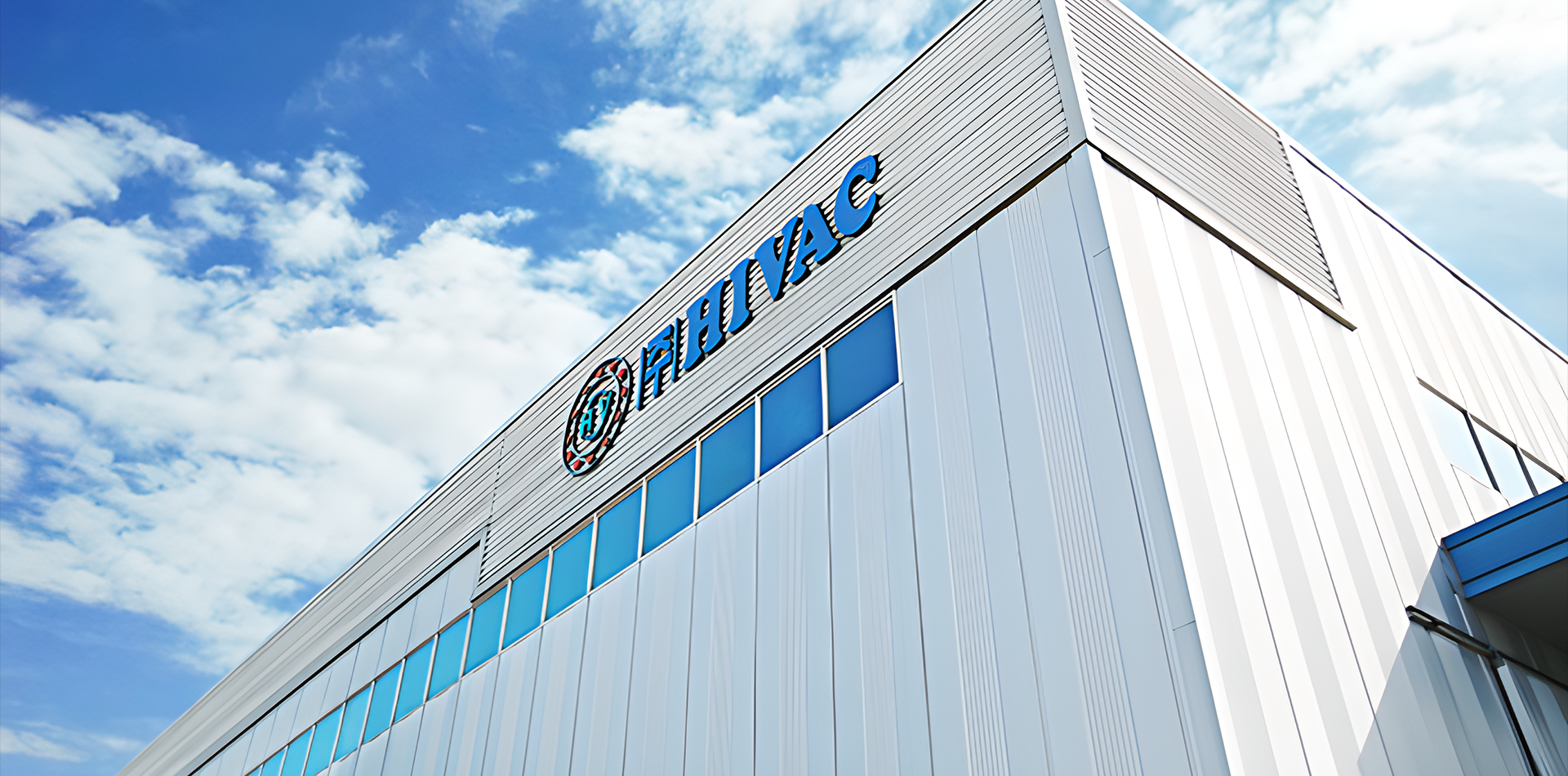
Products
Introducing the products of HIVAC Co., Ltd.,
a future-oriented company leading the brazing industry.
HIVAC MAIN PRODUCTS
A specialized manufacturer of eco-friendly
automotive components HIVAC Co., Ltd.,
-
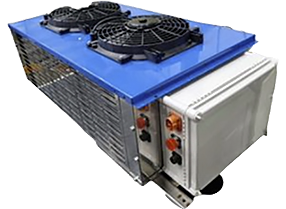
Thermal Management System
A core technology that enhances efficiency by controlling battery temperature, prevents performance degradation caused by overheating or low temperatures, and supports stable operation.
-
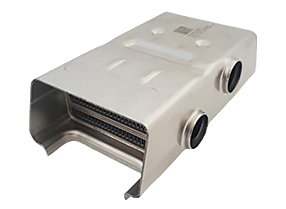
Automotive Heat Exchanger
A device that releases heat generated from engines or batteries to the outside through coolant or air, or transfers it to where it is needed, maintaining the vehicle at an optimal temperature.
-
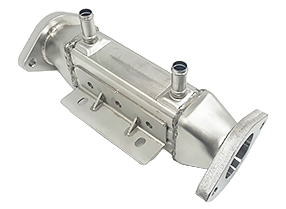
Industrial heat exchanger
A device that efficiently transfers heat generated or required during processes between two fluids, reducing energy loss and improving equipment efficiency.
-
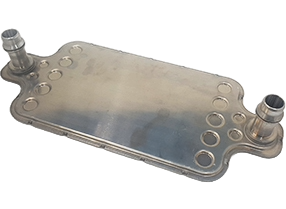
R&D Products
We research and develop devices that transfer and control heat in innovative ways tailored to specific purposes and operating environments.
Environment
HIVAC is committed to research
and development of core heat exchangers
for eco-friendly industries—including hybrid vehicles,
electric vehicles, hydrogen vehicles,
and hydrogen mobility—to support a sustainable future
and care for the environment for future generations.
Social
As a member of the local community,
HIVAC plans to engage in community sharing activities,
volunteer work, and support for public facilities,
striving to fulfill its responsibilities
as a strong technology-driven company.
Governance
As a foundation for continued growth,
HIVAC seeks to practice ethical management,
principled management, and transparent management.
HIVAC COMMUNITY
- Public Relation
- Research achievements
- Notice
-
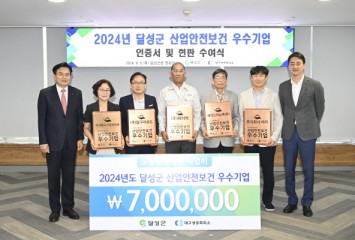
The ceremony for awarding the Industrial Safety and Health Excellent Company Certification was held…
The ceremony for awarding the Industrial Safety and Health Excellent Company Certification was held in Dalseong-gun, Daegu.[Herald Economy (Daegu) = Reporter Kim Byeong-jin] On the 5th, Dalseong-gun, Daegu, held the '2024 Dalseong-gun Industrial Safety and Health Excellent Company Certification and Plaque Award Ceremony' in collaboration with the Daegu Chamber of Commerce and Industry. The ceremony recognized and awarded certificates and plaques to outstanding companies in Dalseong-gun that have taken the lead in creating safe workplaces.The five companies selected as the 2024 Dalseong-gun Industrial Safety and Health Excellent Companies are Gaon Hi-Tech Co., Ltd., Dalguchi Food Co., Ltd., Laji Co., Ltd., Ace Innotek Co., Ltd., and HIVAC Co., Ltd.For these five businesses selected this year, Dalseong-gun will award Industrial Safety and Health Excellent Company certificates and plaques, and provide up to 7 million KRW per company for labor environment improvement projects that can be used to enhance worker facilities and safety equipment.Since last year, Dalseong-gun and the Daegu Chamber of Commerce and Industry have been promoting the 'Industrial Safety and Health Excellent Company Certification Program' to prevent industrial accidents by certifying companies that are actively working to build safe and healthy work environments and providing incentives. They have signed a business agreement for industrial accident prevention in Dalseong-gun.Choi Jae-hoon, the mayor of Dalseong-gun, said, "I thank the business leaders who have taken the lead in creating safe workplaces that support reverse economic growth," and added, "We will continue to listen to the difficulties and suggestions of businesses and actively support them."
MORE VIEW -
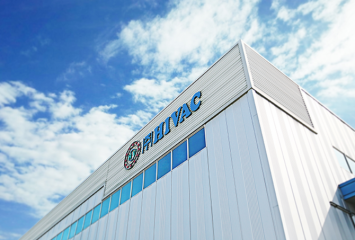
HIVAC has begun the construction of a future automotive parts manufacturing plant at the Daegu Nati…
HIVAC has begun the construction of a future automotive parts manufacturing plant at the Daegu National Industrial Complex.HIVAC, a leading company specializing in heat exchangers for future eco-friendly vehicles (CEO Park Jae-yong), plans to invest 50.1 billion KRW to build a manufacturing plant for future vehicle parts at the Daegu National Industrial Complex. HIVAC recently signed a memorandum of understanding (MOU) with Daegu city regarding this investment.Founded in 2007, HIVAC is a company specializing in the production of thermal management and air conditioning components for future eco-friendly vehicles, such as electric and hybrid vehicles. Based on its patented technology in vacuum brazing, HIVAC transitioned to become a specialized manufacturer of heat exchangers for future eco-friendly vehicles in 2018, and currently supplies products to major Hyundai and Kia models.The new plant is set to break ground this October and is expected to be completed by April next year. With the launch of the new plant, HIVAC expects to generate 120 billion KRW in revenue by 2028. If this target is met, the company will achieve an annual average growth rate (CAGR) of over 50% in the next five years.In particular, HIVAC’s integrated thermal management system components will be applied to Kia's newly released EV3 model this year, as well as the upcoming EV4 model set for release next year. The production volume is expected to expand further depending on market demand.Park Jae-yong, CEO of HIVAC, stated, “HIVAC is rapidly growing in the field of heat exchangers for future eco-friendly vehicles based on core production technologies. We will do our best to become a representative company of Daegu, the future mobility city.”Daegu = Reporter Jeong Jae-hoon, jhoon@etnews.com
MORE VIEW -
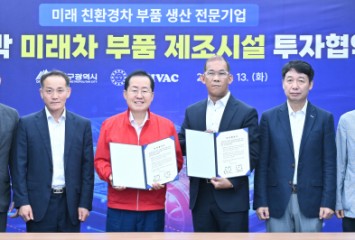
Hivac (HIVAC) makes a new investment in manufacturing facilities for key components of future vehic…
Hivac (HIVAC) makes a new investment in manufacturing facilities for key components of future vehicles.HIVAC Makes New Investment in Manufacturing Facility for Future Vehicle Parts[JobPost] Reporter Koo Woong – On August 13th at 11:30 AM, Daegu City signed an investment agreement with HIVAC Co., Ltd. (CEO Park Jae-yong) for the establishment of a manufacturing plant for future eco-friendly vehicle parts at Daegu National Industrial Complex (Phase 2).Founded in 2007, Highbak is a specialized company in producing thermal management and air conditioning components for future eco-friendly vehicles, such as electric and hybrid vehicles. HIVAC plans to invest 50.1 billion KRW to build a manufacturing plant on a 24,453㎡ (approximately 7,397 pyeong) site within Daegu National Industrial Complex (Phase 2).Based on its patented technology in vacuum brazing (a metal joining technique in a vacuum environment), HIVAC transitioned in 2018 to become a specialized manufacturer of heat exchangers for future eco-friendly vehicles. Currently, HIVAC’s products are installed in major Hyundai and Kia vehicle models.With the recent increase in orders following the launch of new future eco-friendly vehicle models, HIVAC decided to invest in the construction of the new manufacturing facility.The new manufacturing facility is expected to break ground in October this year and be completed by April next year. Once operational, the plant aims to increase revenue from 17.7 billion KRW in 2023 to around 120 billion KRW by 2028. If this target is achieved, HIVAC expects to experience rapid growth with an annual average growth rate (CAGR) exceeding 50% over the next five years.In particular, HIVAC’s integrated thermal management system components will be applied to Kia’s newly released EV3 model this year, as well as the upcoming EV4 model scheduled for release next year. The production volume is expected to increase in line with market demand.Daegu City has been strengthening its position as a leading city in the future mobility industry by attracting large-scale investments from future vehicle companies through initiatives such as the activation of mobility motor materials specialized districts and support for the transition to future vehicle technologies.Notably, HIVAC’s investment is the first new investment following the designation of Daegu National Industrial Complex, Suseong Alpha City, and Kumho Waterpolis as Opportunity Development Special Zones in June. The investment will benefit from incentives such as tax advantages, regulatory exceptions, and additional local investment promotion subsidies.Daegu City expects that these investment incentives from the Opportunity Development Special Zones will continue to attract more investments from companies in the future.Park Jae-yong, CEO of HIVAC, said, “Based on our core production technologies, HIVAC is growing rapidly in the field of heat exchangers for future eco-friendly vehicles. I hope this investment will be a stepping stone for Highbak to grow into a larger company, and we will do our best to become a representative company of Daegu, the future mobility city.”Daegu Mayor Hong Jun-pyo stated, “Daegu is transforming into the city with the best future mobility industry competitiveness in the country, and we will provide full policy support to help future mobility companies continue to grow in Daegu.”Copyright © JobPost. All rights reserved.Source: JobPost (http://www.job-post.co.kr)
MORE VIEW -
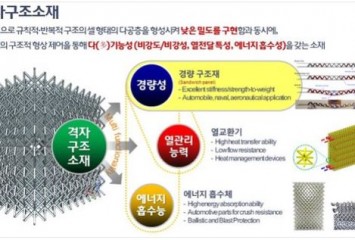
The Materials Research Institute has developed a prototype for battery thermal management for elect…
The Materials Research Institute has developed a prototype for battery thermal management for electric vehicles using lattice structure materials technology in collaboration with HIVAC Co., Ltd.The Korea Institute of Materials Science (KIMS), a government-funded research institute under the Ministry of Science and ICT, has successfully developed a prototype for battery thermal management for electric vehicles using lattice structure materials technology. This achievement was made in collaboration with HIVAC Co., Ltd. (CEO Park Jae-yong) and the Korea Automotive Technology Institute. The research team, led by Dr. Kim Sang-woo from the Smart Materials Processing Lab at KIMS, utilized a 3D metal lattice structure manufacturing technology, which controls mechanical and thermal properties through geometric design of unit cells.Lattice structure materials form an artificial porous structure by regularly arranging unit cells of specific shapes. By designing the material, shape, size, and arrangement of the unit cells, mechanical and thermal properties can be controlled. These materials are lightweight, have excellent energy absorption, and are efficient in heat transfer, making them ideal for multifunctional applications with customized designs for various fields. They are particularly suited for use in aerospace, automotive, and marine transport vehicles due to their superior specific strength and specific stiffness compared to irregular porous structures or bulk materials. Furthermore, their ability to absorb shock loads makes them potentially useful as impact-resistant, bulletproof, and explosion-proof materials. The open lattice structure also offers a large surface area and uniform internal flow, enhancing thermal properties and minimizing pressure loss, making them suitable for heat exchangers, heat sinks, and various thermal energy management devices.However, in some technologically advanced countries such as the U.S. and the U.K., industrialization in the private sector has been slow, except for the defense industry. The main obstacle is the increased manufacturing cost due to the complex internal shapes of lattice structures.KIMS developed a single-layer 3D lattice structure using metal forming technology, which was then assembled in layers by HIVAC Co., Ltd., and vacuum brazing was used to join the layers and manufacture the 3D metal lattice structure material. This approach leverages traditional metal processing and joining technologies, such as plastic forming and vacuum brazing, enabling mass production without the need for additional facilities, using only existing manufacturing infrastructure.Automobile manufacturers are focusing on the development of eco-friendly and autonomous vehicle technologies due to environmental regulations. These vehicles require high-capacity batteries, motors, and various electronic components, leading to an increase in vehicle weight and high heat generation. As a result, the focus is on developing lightweight and heat dissipation technologies.The metal lattice structure material can be applied as a lightweight, functional component that combines high rigidity, energy absorption, and thermal management capabilities. This makes it suitable for various industrial sectors, including future transport vehicles.Dr. Kim Sang-woo, the principal researcher at KIMS, and Park Jae-yong, CEO of HIVAC Co., Ltd., said, "Through the development and characterization of a battery thermal management prototype for electric vehicles using metal lattice structure materials, we have proven the lightweight structure and heat dissipation performance improvements of products using this technology. We expect this to lay the foundation for future applications of high-efficiency multifunctional products in various industrial fields."The research team currently holds 8 domestic and international patents for metal lattice structure material manufacturing technologies. In collaboration with HIVAC Co., Ltd., a company specializing in vacuum brazing-based heat exchangers, the team aims to commercialize lattice structure materials for electric vehicle battery thermal management products within the next five years. If the commercialization is successful, annual sales exceeding 10 billion KRW are expected.This research was supported by the Ministry of Trade, Industry, and Energy under the 'Core Material Source Technology Development Project (Development of Lightweight Multifunctional PCM (Periodic Cellular Material) Design and Manufacturing Technology with High Strength and Heat Dissipation Properties).'Source: JoongAng Ilbo Online.
MORE VIEW



HIVAC New Plant 119, Gukgasandan-nam-ro 60-gil, Guji-myeon, Dalseong-gun, Daegu, Korea
Tel : +82-53-356-5146 Fax : +82-53-356-2420